Originally published in bilingual magazine Le Petit Pâté Illustré in July 2013. Revised August 2026.
Of Death
and Fresh Water
written by Lila Mizzi,
illustrated by Line Hachem, colors by Chloé Faller
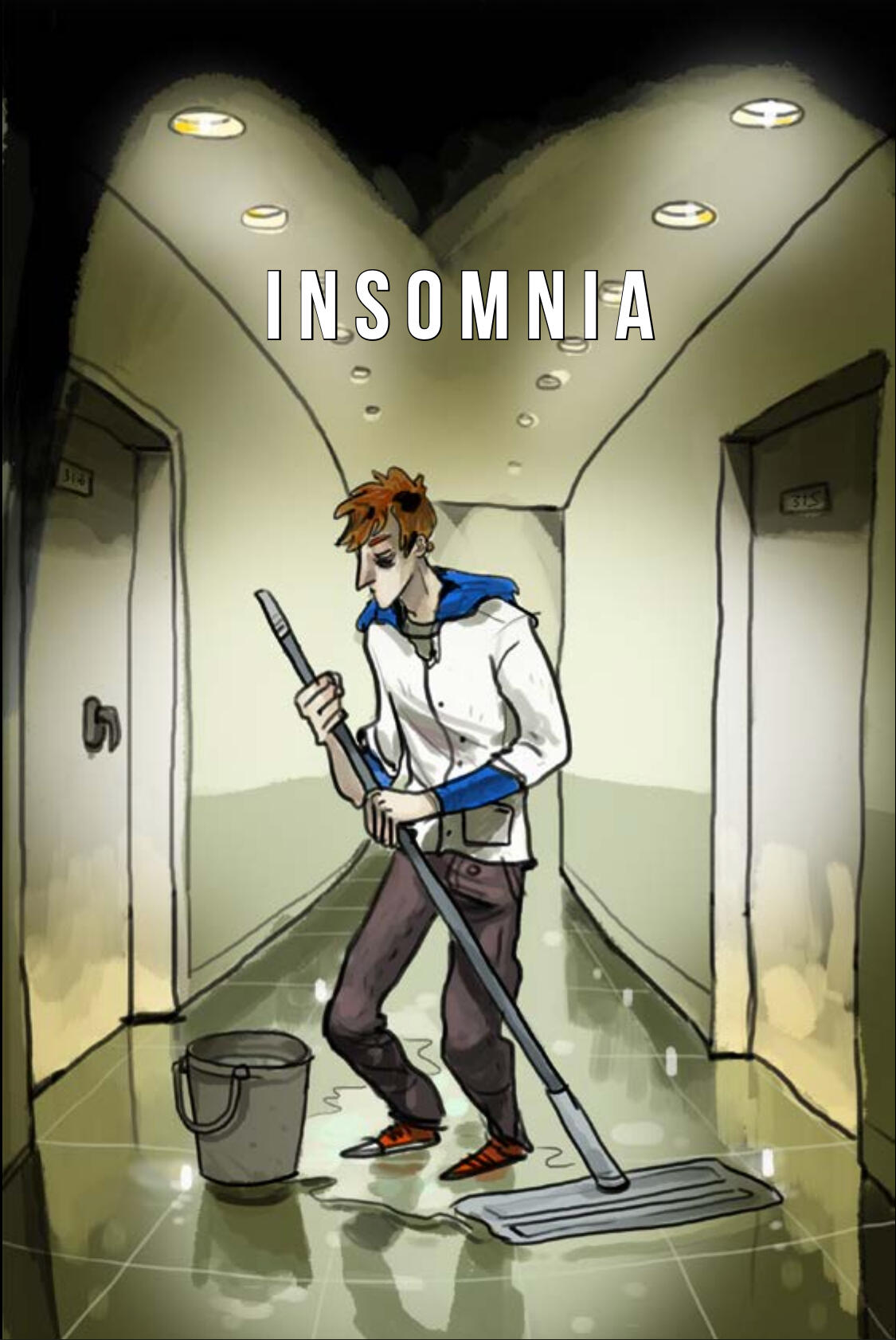
Graveyard shift. No qualifications needed. Hourly pay above minimum wage.
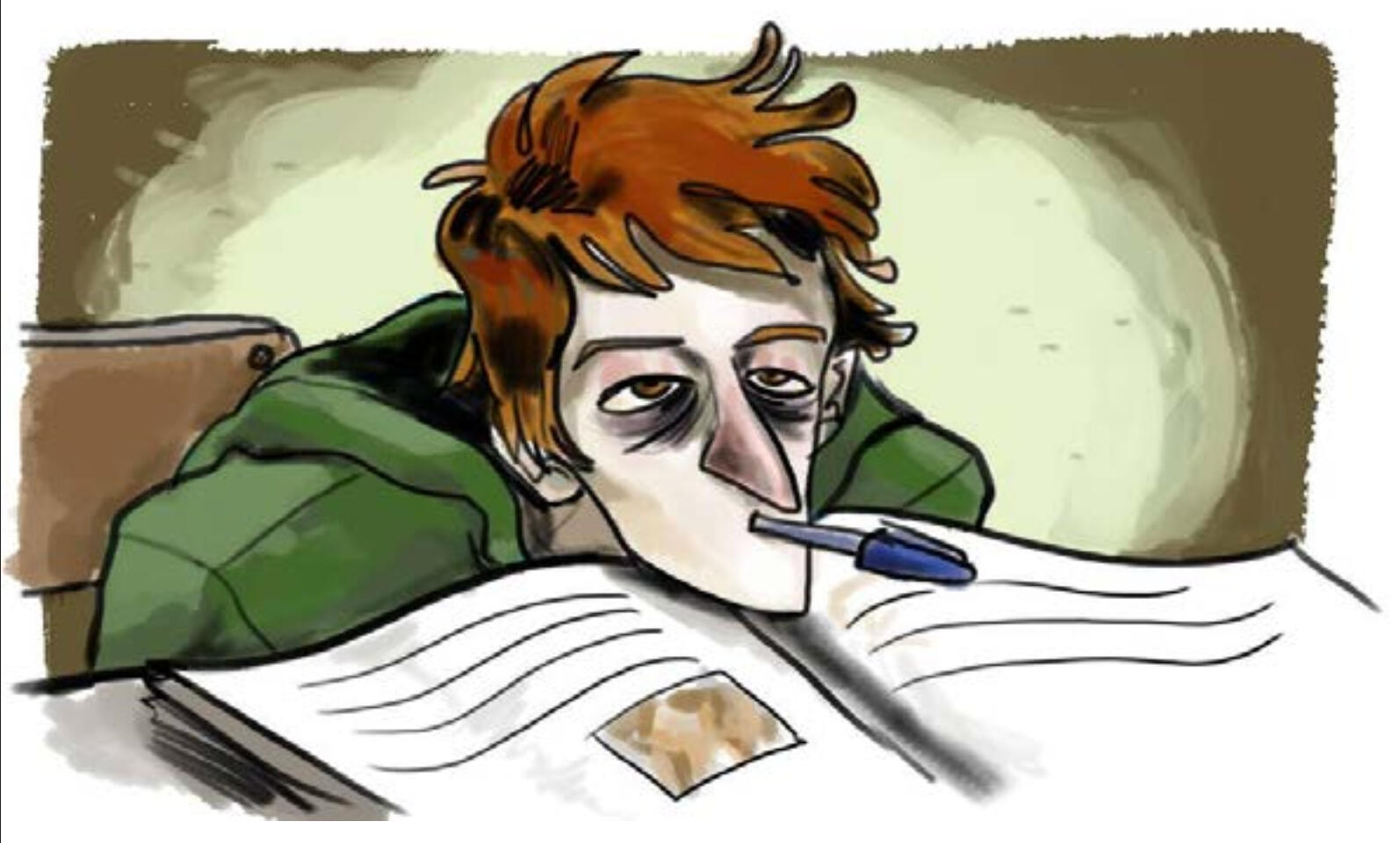
This was the job ad that caught my attention a few months ago, when I desperately needed to earn some cash while still attending my classes. A chronic insomniac, I could finally put sleepless hours to good use, and thus became a janitor at my university’s hospital.
At first, I was only there to clean. Quickly, personnel shortage and a gregarious nature had the nurses sending me in to keep patients company when they lacked the time. My unit is the palliative care one, you see, and soothing the dying is time-consuming and slow-going. Half the time, when our patients click that call button, they want an ear, any ear, not a pair of trained hands.
Night after night, I listened.
Some people were there briefly. Others lingered, declining over months. Some felt it was their time, and others thought it unjustly early. All were beyond saving, the only peace they could reach that of death. Some patients made sense, and others were rendered incoherent by pain, drugs, or disease. All, I believe, were relieved to gaze upon an attentive face during anxious, sleepless nights. We all want to share our stories, to have mattered, here, at the end. And we want someone to look us in the eyes, lie, and tell us "It's going to be okay".
When the morning came, I wouldn’t remember the color of the sky, or that there were sane, gleeful people out there. I would go to class and, in a blur of tiredness, I would doubt which life was more real: the intense conversations with the dying or the chit-chats with my classmates.
One night, a nurse asked me to check on Clara in room 353. I was waiting for the hallway floors to dry anyway, so I went. However, the privacy curtain was slightly open and I glanced at someone already sitting next to the patient. A man, based on his imposing stature, wearing a nurse’s uniform, though I did not recognize him. Maybe from another department? The man was listening intently to the patient's words, like I would have done. I felt a pang of jealousy, but there were enough distressed people in the palliative care unit for the two of us.
Instead I went to George’s room. The elderly man had caught a nasty nosocomial infection after coming in for an appendectomy. At this point, he was unlikely to leave in any other way than through the morgue. It was a stroke of bad luck, which he said explained why he always drew winning hands when he beat me at cards. Some patients were like that, always quick to laugh, seemingly ready to move on. He had the best stories, from his youth in Louisiana to his second marriage in New York City, and he always did hilarious impressions of his friends and celebrities alike.
I played some hands of rummy with him as he talked about the Civil Rights Movement and I forgot all about the mysterious nurse.
A few nights went by and, after a stint helping clean up the emergency room after a muddy and bloody rugby team went through, I went back to my beloved palliative care unit, where bodily fluids were less abundant. I thought of Clara in 353 and went for a visit. She was pale and hairless, on the tail end of her last chemo attempt. She put down her book, “Hello, there. Are you a new nurse?”
“Clara? It’s me, Sam!”
No recognition in her eyes. I sat by the bed and got her talking, her confusion waning as she started to tell me a story I had heard before, about her adventurous baby girl breaking a leg crawling out of bed. The memory had been very vivid a few days ago, but now she couldn’t tell exactly what had happened. She remembered the tiny plaster, but not the accident itself.
Maybe she was tired. It was already 2:00 AM after all. Before leaving the room, I peeked at her medical record and saw that a visiting family member had noticed her troubled memory. A doctor’s note also read that amnesia was a highly unfamiliar symptom of her pathology.
Over the next couple weeks, I repeatedly stumbled upon the mystery nurse again. I saw him at Clara’s bedside twice more. She died remembering nothing but her husband. I noticed memory losses with other patients, ones who had not been necessarily prone to it before.
But it was when George started to forget that I really worried. The man had encyclopedic knowledge and perfect recall. He could quote Shakespeare, James Baldwin, Stephen Sondheim, and more, to the word. I’d been wanting to record soundbites of him telling his stories, when he’d break into songs or into the cadence of other poets throughout, peppering his words with those of others. To see him forget, every night a bit more, saddened me more than the prospect of his death. And the more time I spent with George, the more glimpses of the mysterious nurse I caught.
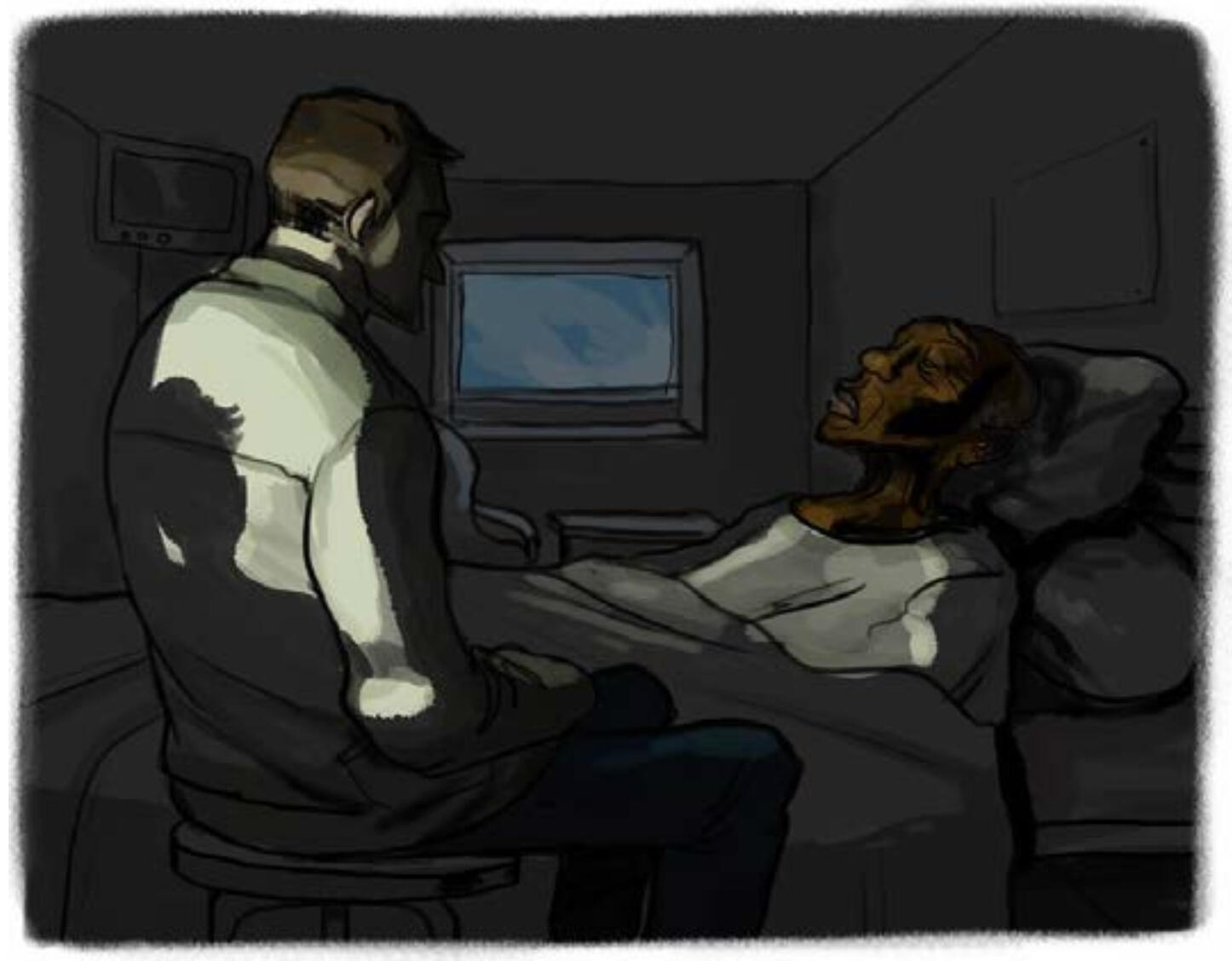
One Tuesday, I arrived early and the man was still there. I sat outside the room, and listened to the story until the end. George was a talented storyteller; he knew where to put details, hand movements and silences. Once it was over, the nurse gave him a water bottle, the small plastic ones that were ubiquitous at the hospital, available on lunch trays. He said words in a language I couldn’t place. When I went into George’s room later, he had forgotten both the story and the man he had told it to.
I decided to investigate more closely.
A week later, I was downright frightened. I had several theories about the man. They were crazy, but the facts were crazier. The man talked to dying patients only. Every time, they wouldn’t remember him or the story they had told him and he would give them a water bottle. Also, despite wearing a nurse’s uniform, he would never do any medical job. I spoke about him to the regular nurses: they seemed to think he was an intern but didn’t know his name. Nobody seemed to care as they rushed about their jobs, despite my questions.
Was he a mad scientist drugging their water? But often, the water bottles went untouched and the patients forgot anyway. Another possibility had come to me in the first hours of morning, when mist rises on campus and I am so tired everything feels eerie. Was the man… Death incarnate? But after a nap, this explanation also proved unsatisfactory: I had seen people die without receiving any visits from the man. So after two more deaths, many more theories and even less sleep than usual, I decided to confront him.
And, well, the truth was by far crazier than my most twisted theories.
“You have been following me,” he said, unsurprised to see me corner him as he exited George’s room.
He was twice my size, a burly white guy of average looks beside his height, brown eyes and hair. But being scared always made me angry, and I opened with, “Why are you stealing memories?"
The man sighed, looked around at the quiet but far from empty hallway, other staff going about their nightly duties.
“Let’s sit.”
He opened the door to 367, which I had cleaned back to neat emptiness earlier in the night, and he sat in the guest chair while I hopped on the bed. This was one of the few private rooms on the floor.
“You will have trouble believing me,” he said, “but do not interrupt me, please.”
I opened my mouth to protest, but he calmly reiterated, “If you interrupt me, the story will unravel, I will leave, and you will never know the truth. For I can only tell the truth when I start speaking.”
He talked intently, his face open. I’m not sure why, but I was convinced he indeed was not lying. What was I getting myself into?
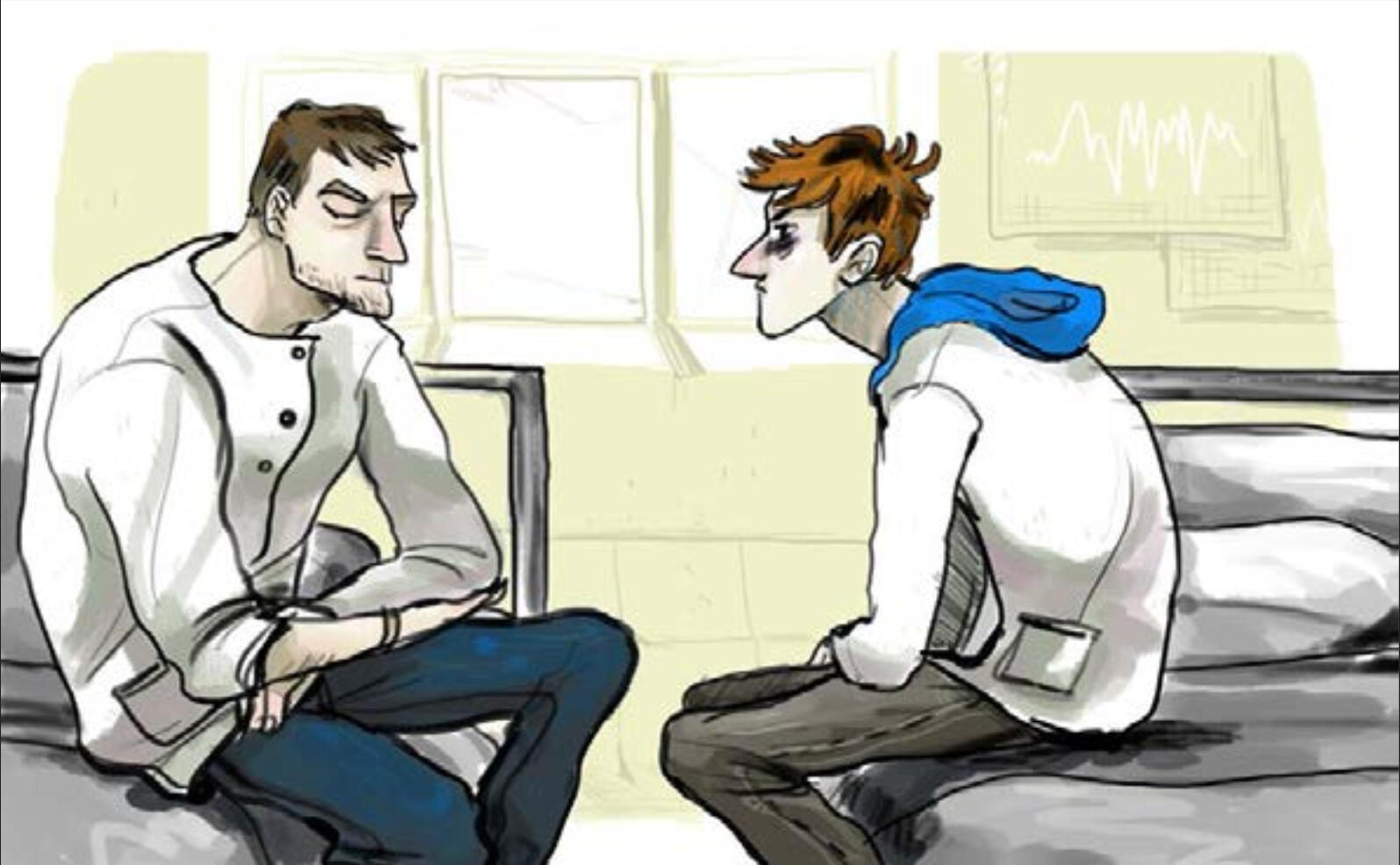
I nodded and he started his tale.
“I am from a far away place. As in, outside of your solar system.”
I snorted, disbelieving, but his glare reminded me of what I had agreed to a moment before.
“On my world, when we were made of flesh and blood, much like you, we were prone to disease and to hunger. But as our technology advanced, so did our skill in detaching ourselves from bodily concerns. Eventually, thirst was the only one to remain, along with bodies used merely as anchors. Our minds became free to wander, and we became ravenous for a new type of sustenance: stories. What had been entertainment became necessary. Boredom meant death.”
I was settling into the tale now, and its pattern rang a bell. Immortal beings who survived on stories and could not lie? I opened my mouth, ready to interject, then remembered his threat and closed it. I wanted the end of the story now, damn it.
“We thrived for an age on our own planet. When someone’s mind was ready to fade, we collected their memories for others to feed on. But to use the language of this place,” he gestured to the hospital room around us, “the more a memory is told, the less nutritive it is. The less varied the memories, the more deficiencies are introduced. The more insanity among my people. And we are not making new memories of our own fast enough.”
A dramatic pause, the air around us charged.
“So we started traveling further, across the stars, looking for new stories. True stories, memories, are the most nutritious to bring home. But memories told should be memories forgotten, as the more a story is told, the less potent it is. Those of us who travel, we seek out sentient species, and among them individuals willing to forget. The dying are usually more willing.”
It was a lot to take in, but in my dazed, sleep-deprived state, I accepted it.
“We visited your planet once before, when we were in our infancy of traveling the universe. Our skill in passing as human, and in getting you to forget, was not so advanced, but our aim was the same: find stories to feed on. Human stories were very popular, but have lost potency. A few millennia passed, so a new team was sent. We are more discreet now, more experienced. We’d rather you not know we are here at all, this time.”
That ominous pronouncement had the air of a final period, and I muttered to myself. The man, the creature really, smiled toothily.
“You did call us fae then,” he confirmed.
Seeing he’d not vanished in a puff of smoke, I pushed, “And what do you call yourselves?”
He inclined his head, “You can call us Those Who Feed on Death and Fresh Water.”
This reminded me of a small detail, my mind coming back to it rather than trying to process the whole thing.
“And the water bottles?” I asked.
“Water is our only tangible food left, and the most precious offering we can make for someone’s memories.”
A new silence stretched as my brain spun. The alien broke it again, “I can hear stories, but not tell them. I must make you forget now.”
Fear and anger twanged again in my gut and I protested, “Why did you tell it to me in the first place then?”
“As you’ve watched me, I have watched you. You have the soul of a story gatherer. Like me.”
Our eyes met and held, and they were still the pedestrian brown of before, but seemed to contain unfathomable depth now.
He sighed, “It was good to talk rather than listen, for once. Now, you must recount this entire tale, from when you first came to the hospital and to suspecting me, through to me revealing my true nature.”
He got up and used his nurse key to open one of the room’s cupboards, pulling out a small water bottle. I got up as well, alternatively shoving my hands in my pockets and through my hair. I glanced at the door, but his quiet, assured presence told me that wouldn’t work.
He sat back down and I followed suit. He handed the bottle to me, and after a moment’s hesitation, I took it. To learn that aliens existed, but to not remember it come morning… The whole night had the quality of a fever dream, more so than usual.
“It’s time,” he said, “And don’t try to pull tricks on me. I know them all.”
I looked him in the eyes, and started to tell my story.
“Graveyard shift. No qualifications needed. Hourly pay above minimum wage…”
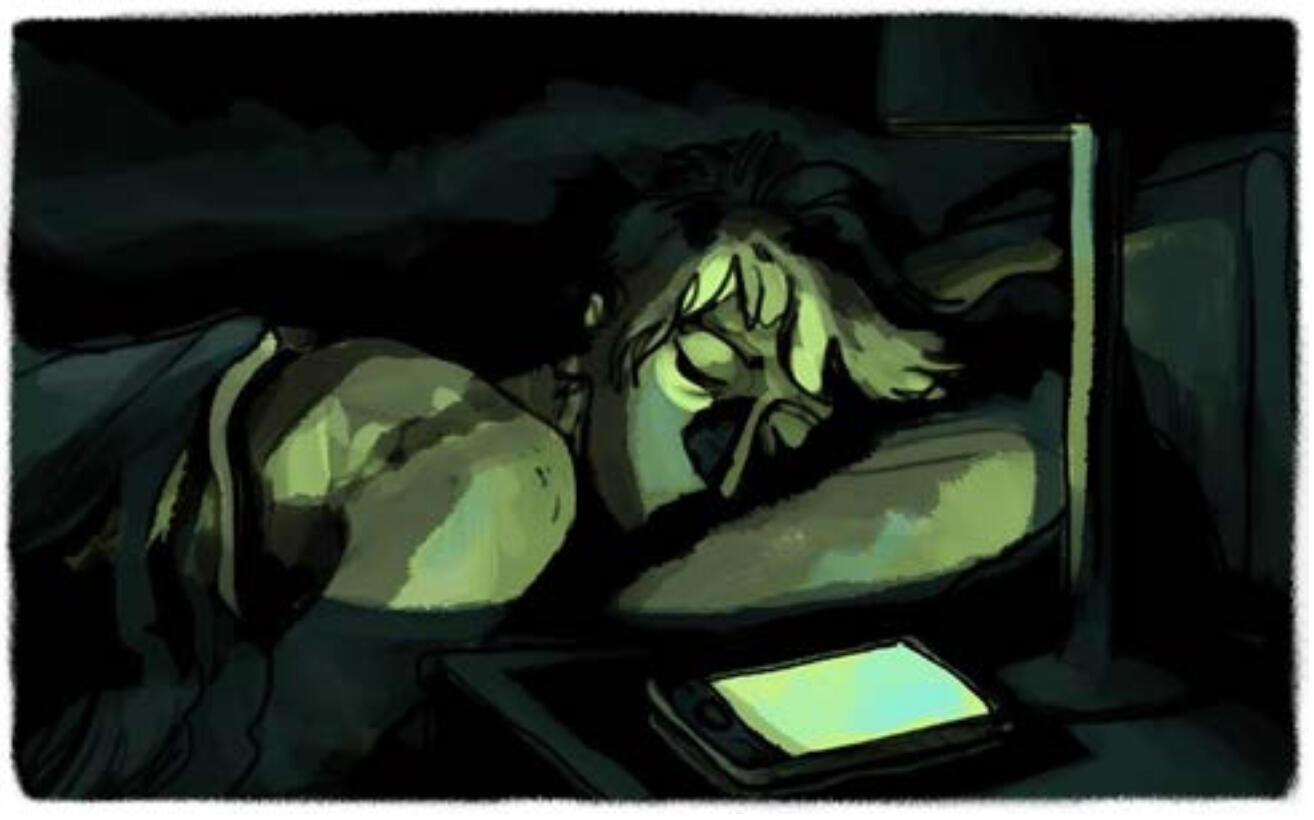
I’m coming back home after a shift so long I feel drunk on tiredness, my feet light as they bounce through the dewy turf I shortcut through to my dorm. I wonder what kept me at the hospital for the whole night. Did I get lost in one of George’s rummy challenges? I toy with the hospital’s water bottle I find in my pocket. Weird, I usually take my reusable one. Finally, I’m in bed. I take my phone out to set my alarm. The recording feature is on. I turn it off. Should I erase the file? It’s pretty big. It’s probably a pocket dial. But I wanted to record some of George’s memories, impressions and all. I save the file and go to bed.
I’ll listen to it tomorrow.
© Lila Mizzi. All rights reserved.
Thanks
Augue metus sem porta mollis fringilla aenean. Luctus sit accumsan id commodo in nulla erat vivamus ullamcorper nunc fermentum viverra pulvinar vel dis vis.